The enterprise AI marketplace is currently suffering from collective hype blindness. Driven by venture capital demos and basic framework wrappers, developers are rushing to build autonomous "multi-agent networks" for problems that demand rigid business rules.
At IKONIC LABS, we fell into this trap ourselves while building BidLens, our internal lead intelligence and high-volume automated proposal engine. Our initial build was a complex network of nine distinct micro-agents executing a sequential chain. It looked beautiful on a presentation slide. In production, it was an operational nightmare.
This technical retrospective documents our architectural evolution: how we diagnosed structural failure, the software engineering principles we used to compress our system, and how industry leaders manage production-grade AI pipelines and autonomous systems end-to-end.
⚡ IKONIC LABS • AI Systems Engineering
Ready to Deploy Custom AI Agents for Your Enterprise?
From 48hr scoping to production SaaS and multi-agent workflows — built by engineers who ship.
1. The Starting Point: The Broken 9-Agent Sequential Chain
Our original objective was straightforward: ingest a raw, unstructured Upwork job post payload, evaluate the client's financial viability, cross-verify the job against our verified engineering case studies (Lead IQ Case Study), and synthesize a hyper-targeted, human-sounding technical pitch.
We chose to model this using a multi-agent paradigm, assigning a specialized LLM prompt to every micro-step in the pipeline:
┌────────────────────────────────────────────────────────────────────┐
│                    RAW UNSTRUCTURED JOB PAYLOAD                    │
└─────────────────────────────────┬──────────────────────────────────┘
                                  │
                                  ▼
┌────────────────────────────────────────────────────────────────────┐
│ 1. Job Parser Agent (LLM Call 1)                                   │
│    └──► Extracts tech stack tags, budget & hourly rate             │
└─────────────────────────────────┬──────────────────────────────────┘
                                  │
                                  ▼
┌────────────────────────────────────────────────────────────────────┐
│ 2. Client Profiler Agent (LLM Call 2)                              │
│    └──► Evaluates client hire rate, total spend & risk profile     │
└─────────────────────────────────┬──────────────────────────────────┘
                                  │
                                  ▼
┌────────────────────────────────────────────────────────────────────┐
│ 3. Portfolio Matcher Agent (LLM Call 3)                            │
│    └──► Rummages through historical case text (Uncached RAG)       │
└─────────────────────────────────┬──────────────────────────────────┘
                                  │
                                  ▼
┌────────────────────────────────────────────────────────────────────┐
│ 4. Screening Question Agent (LLM Call 4)                           │
│    └──► Detects passphrases & custom screening questions           │
└─────────────────────────────────┬──────────────────────────────────┘
                                  │
                                  ▼
┌────────────────────────────────────────────────────────────────────┐
│ 5. Profile Selector Agent (LLM Call 5)                             │
│    └──► Picks the optimal agency persona                           │
└─────────────────────────────────┬──────────────────────────────────┘
                                  │
                                  ▼
┌────────────────────────────────────────────────────────────────────┐
│ 6. Strategy Director Agent (LLM Call 6)                            │
│    └──► Diagnoses the core technical bottleneck                    │
└─────────────────────────────────┬──────────────────────────────────┘
                                  │
                                  ▼
┌────────────────────────────────────────────────────────────────────┐
│ 7. Cold Prose Writer Agent (LLM Call 7)                            │
│    └──► Drafts narrative paragraphs (Context dilution occurs)      │
└─────────────────────────────────┬──────────────────────────────────┘
                                  │
                                  ▼
┌────────────────────────────────────────────────────────────────────┐
│ 8. Cynical Critic Agent (LLM Call 8)                               │
│    └──► Scores draft & provides feedback (Triggers retry storms)   │
└─────────────────────────────────┬──────────────────────────────────┘
                                  │
                                  ▼
┌────────────────────────────────────────────────────────────────────┐
│ 9. QA Scrubber Agent (LLM Call 9)                                  │
│    └──► Truncates length & appends signature                       │
└─────────────────────────────────┬──────────────────────────────────┘
                                  │
                                  ▼
┌────────────────────────────────────────────────────────────────────┐
│                    FAILED OUTPUT (70s LATENCY)                     │
│         (Compounded Hallucinations + 12,000 Tokens Burned)         │
└────────────────────────────────────────────────────────────────────┘
The Production Diagnostic Metrics:
- Total LLM Invocations: 9 to 12 API calls per lifecycle.
- Total System Latency: 45 to 70 seconds.
- Token Overhead: ~12,000 tokens consumed per job post.
- Fatal Flaws: Compounding context degradation across the chain, frequent HTTP 429 (Rate Limit) errors, extreme vulnerability to prompt drift, and generic resume dumping.
The Diagnostic Analysis: Why the Chain Broke
This architecture failed due to The AI Telephone Game. When you pass unstructured text variables across nine consecutive LLM boundary layers, information quality degrades exponentially. Step 7 (The Writer) did not receive the crisp reality of the original job post; it received a highly generalized, diluted summary produced by the previous six prompts.
Furthermore, forcing an expensive LLM context loop to handle basic tasks like checking if a keyword exists or calculating a math scorecard is an anti-pattern. It introduces massive latency and unnecessary cost overheads. Compare this with optimal architectural paradigms in our guide on Scaling Multi-Agent AI Systems.
2. The Breakthrough: The Controlled Intelligence Loop + Deterministic Core
Realizing that autonomous agents are too unpredictable for rigid business requirements, the engineering team at IKONIC LABS aggressively compressed the entire system. We stripped away the illusion of agent autonomy and replaced it with a Hybrid Deterministic Workflow.
We moved all data parsing, validation, and layout routing out of the LLM context and hardcoded them directly into async Python (FastAPI workflow automation). We reserved LLM tokens exclusively for what they excel at: semantic interpretation and human-prose synthesis.
The Compressed Architecture Blueprint:
                        UPWORK JOB POST / URL
                                  │
                                  ▼
┌────────────────────────────────────────────────────────────────────┐
│            STAGE 1: DETERMINISTIC PRE-PROCESSING (0ms)             │
│                   (100% Pure Python — 0 Tokens)                    │
├────────────────────────────────────────────────────────────────────┤
│ • Job Forensics: Regex parser, tech stack extraction, alerts       │
│ • Client Forensics: Total spend, hire rate, price ceiling, EV      │
│ • Question Extractor: Screening questions & passphrase detection   │
│ • Profile Selector: Deterministic BD profile matching              │
│ • Claim Ledger: Strictly defines Allowed vs Forbidden Claims       │
└─────────────────────────────────┬──────────────────────────────────┘
                                  │
                                  ▼
                       [BID DECISION SCORECARD]
                (Client Fit, Skill Fit, Connects ROI)
                                  │
                                  ▼
┌────────────────────────────────────────────────────────────────────┐
│              STAGE 2: STRATEGY DIRECTOR (LLM Call 1)               │
│                  Model: Groq / openai/gpt-oss-20b                  │
├────────────────────────────────────────────────────────────────────┤
│ 6-Step Architectural Reasoning:                                    │
│ 1. What is moving? (Leads, documents, audio stream, records)       │
│ 2. Where is it moving? (Source -> Logic -> Destination)            │
│ 3. What can break? (Duplicate webhooks, lost context, races)       │
│ 4. Deterministic vs. AI Split (Hard logic vs. intent scoring)      │
│ 5. Exact Proof Match (Single 1:1 verified project whitelist)       │
│ 6. Sharp Technical Fork Question (Actionable discovery fork)       │
└─────────────────────────────────┬──────────────────────────────────┘
                                  │
                                  ▼
                     IMMUTABLE STRATEGY CONTRACT
                   (Persisted to SQLite DB Column)
                                  │
                                  ▼
┌────────────────────────────────────────────────────────────────────┐
│               STAGE 3: PROPOSAL WRITER (LLM Call 2)                │
│                  Model: Groq / openai/gpt-oss-20b                  │
├────────────────────────────────────────────────────────────────────┤
│ • Hook (<260 chars): Job-specific bottleneck diagnosis             │
│ • Flowing Human Prose: 2-3 paragraphs (Strictly NO bullet points)  │
│ • Decision Boundary: Automated vs. human review boundaries         │
│ • Screening Questions: Direct, evidence-backed answers             │
└─────────────────────────────────┬──────────────────────────────────┘
                                  │
                                  ▼
                            INITIAL DRAFT
                                  │
                                  ▼
┌────────────────────────────────────────────────────────────────────┐
│         STAGE 4: CLIENT CRITIC & REWRITE LOOP (LLM Call 3)         │
│                  Model: Groq / openai/gpt-oss-20b                  │
├────────────────────────────────────────────────────────────────────┤
│ • Cynical Hiring Manager simulation (Reply Likelihood score /10)   │
│ • Checks for resume dumping, buzzwords, or weak hooks              │
│ • IF Score < 8.0 -> Triggers 1 TARGETED REWRITE                    │
│ • ELSE -> Passes directly to QA Scrubber                           │
└─────────────────────────────────┬──────────────────────────────────┘
                                  │
                                  ▼
┌────────────────────────────────────────────────────────────────────┐
│                STAGE 5: DETERMINISTIC QA & SCRUBBER                │
│                   (100% Pure Python — 0 Tokens)                    │
├────────────────────────────────────────────────────────────────────┤
│ • Banned Buzzword Scrubber: Eradicates "dive deep", "seamless" etc │
│ • Link & Claim Verifier: Ensures URLs match active whitelist       │
│ • Length Guard: Enforces strict 140–220 word budget                │
│ • Signature Formatter: "Best,\nKafait Ullah"                       │
└─────────────────────────────────┬──────────────────────────────────┘
                                  │
                                  ▼
┌────────────────────────────────────────────────────────────────────┐
│                    FINAL VERIFIED PROPOSAL (3s)                    │
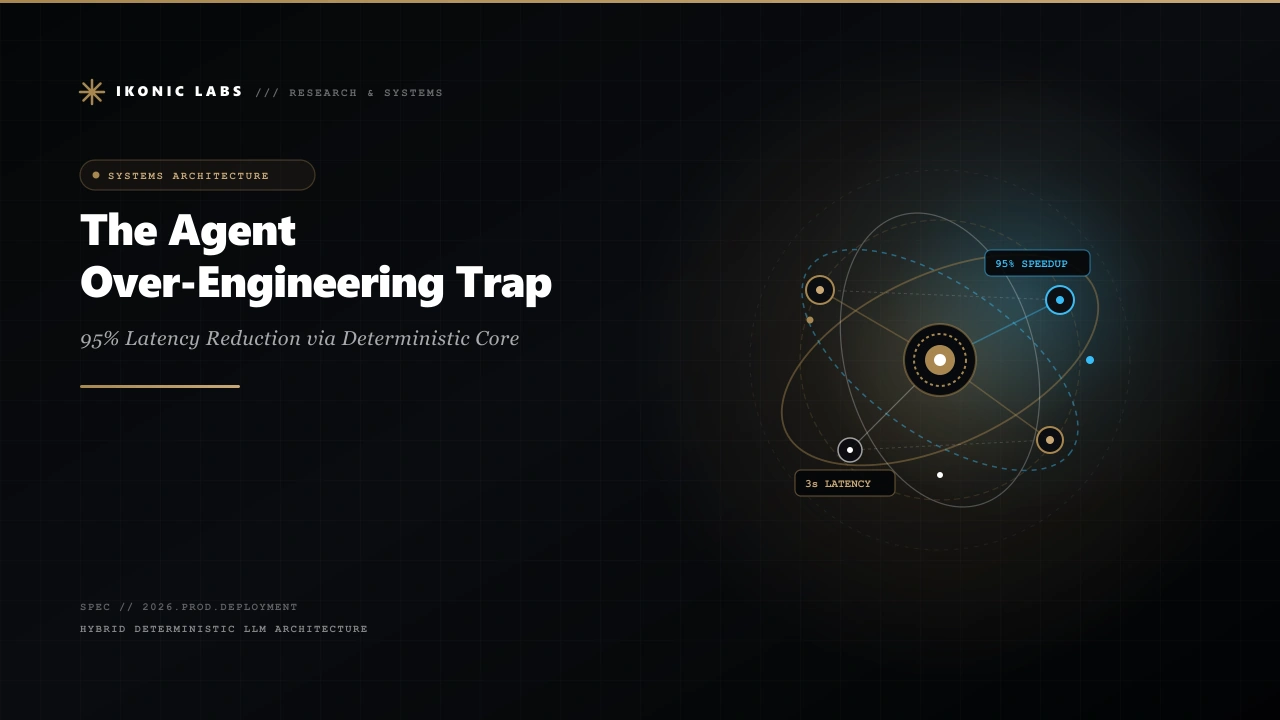
│            (95% Latency Reduction + 85% Cost Reduction)            │
└────────────────────────────────────────────────────────────────────┘
The New Architecture Performance Profile:
- Total LLM Invocations: 2 normal calls (Max 3 if a critique rewrite loop is conditionally triggered).
- Total System Latency: 3 to 6 seconds (91.4% to 95.7% latency reduction).
- Token Overhead: ~1,800 tokens per runtime lifecycle (85% cost reduction).
- System Stability: 100% predictable execution paths, completely eliminated hallucinated links or metrics, and natural, human-sounding text output.
3. Production Implementation: Code Over Prompts
Here is how this pattern looks in production Python. Instead of asking an LLM to "be careful and not hallucinate", we enforce immutable Pydantic schemas and deterministic pre-checks:
from pydantic import BaseModel, Field
from typing import List, Dict

class StrategyContract(BaseModel):
    """Immutable data contract created by LLM Call 1, consumed by LLM Call 2."""
    real_problem_diagnosis: str = Field(..., description="The exact bottleneck without repeating job text")
    what_is_actually_difficult: str = Field(..., description="Underlying architectural risk")
    system_pattern: str = Field(..., description="E.g., Webhook sync & state machine")
    technical_decisions: List[str] = Field(..., max_items=3)
    decision_boundary: Dict[str, str] = Field(
        ...,
        description="Keys: 'what_can_be_automated' and 'what_requires_human_review'"
    )
    primary_proof_project: str = Field(..., description="Must match verified whitelist")
    cta_scoping_question: str = Field(..., description="Actionable technical fork question")

def deterministic_qa_scrubber(raw_proposal: str, allowed_links: List[str]) -> str:
    """Zero-token programmatic post-filter: cleans buzzwords and validates URLs."""
    banned_buzzwords = ["dive deep", "seamlessly", "cutting-edge", "game-changer", "look no further"]
    clean_text = raw_proposal

    for buzzword in banned_buzzwords:
        clean_text = clean_text.replace(buzzword, "")
        clean_text = clean_text.replace(buzzword.capitalize(), "")

    # Ensure no fabricated URLs exist
    for word in clean_text.split():
        if word.startswith("http") and not any(valid_url in word for valid_url in allowed_links):
            clean_text = clean_text.replace(word, "[Verified Link in Bio]")

    return clean_text.strip()
4. The Three Golden Guardrails of AI System Architecture
To prevent future regression into agent over-engineering, IKONIC LABS operates under three unshakeable production rules:
Rule 1: The Binary Test (Deterministic vs. Semantic)
Before writing an LLM prompt, ask: Can this process step be solved using a clear True/False statement, an exact text match, or a mathematical formula?
- If Yes: Use deterministic Python (e.g., checking if a budget is above $1,000, filtering strings via regular expressions, querying exact tech tags).
- If No: Route to an LLM node (e.g., diagnosing a messy technical bottleneck described by a non-technical customer).
Rule 2: The Immutable State Contract Pattern
Large language models are inherently fluid and prone to logic drift. To prevent one node from corrupting the inputs of the next node, never pass raw, open-ended strings directly between multiple LLM calls.
Force your first reasoning node to emit a highly structured JSON object matching a strict type boundary (Pydantic). Save this object immediately to a persistent transactional layer (SQLite or PostgreSQL). Force the next node in the pipeline to read its data directly from that database. This locks your data context down in stone. Learn more about state checkpointers in our Autonomous AI Agent Systems Architecture Blueprint.
Rule 3: The Programmatic Parental Filter
An LLM will eventually ignore system prompt boundaries due to model degradation or attention decay. It will occasionally inject forbidden phrases ("in today's fast-paced digital world") or use banned bullet points.
Never expose raw LLM output directly to your end delivery point. Always pass the generated text string through an aggressive, algorithmic Python cleaning engine. Use standard code to scrub banned buzzwords, verify link whitelists, and clip lengths to hard structural limits.
5. How the World's Elite Teams Manage AI Infrastructure
Our architectural transition matches the production patterns utilized by top-tier modern engineering agencies and leading AI research laboratories.
The Software Agency Standard
Elite software agencies do not deploy open-ended agent frameworks like CrewAI or AutoGPT for enterprise client applications. They use Harness Engineering. They treat LLMs exactly like an unpredictable, third-party REST API.
They use tools like LangGraph or explicit state graphs to model systems as Cyclic Directed Acyclic Graphs (DAGs). Every state transition is rigorously managed by central developer code. The AI is never allowed to invent a new step; it is simply a worker assigned to process text within a fixed sequence track. Read our full comparison in LangGraph vs CrewAI: Which Framework Should You Choose?.
The AI Infrastructure Standard (OpenAI & Anthropic)
When you evaluate cutting-edge tools like Claude Code or OpenAI's advanced assistants, the system feels completely autonomous to the user. However, behind the user interface lies a highly restricted State Machine Grid.
To protect profit margins and prevent runaway latency, these platforms implement Multi-Pass Token Optimization. They run fast, low-cost "dumb" classification layers (like regex models or ultra-small fine-tuned embeddings) to filter out 70% of user input noise before hitting their primary large flagship models.
Furthermore, they enforce automated Timeouts and Cycle Breakers. If an agent loop fails to resolve an error within three iterations, hardcoded software triggers an immediate circuit break to stop a runaway billing loop.
6. The Ultimate Architectural Mindset Shift
The foundational breakthrough of modern AI development can be summarized in a single principle:
“Your application code provides the iron-clad tracks. The LLM is merely the train.”
When you give an AI agent the freedom to build its own tracks, your software will inevitably derail in production. True enterprise-grade engineering requires the developer to maintain complete programmatic authority over data routing, state tracking, and compliance boundaries.
By shifting to a deterministic core and restricting our LLM nodes to specific semantic tasks, IKONIC LABS successfully transformed a slow, expensive prototype into a reliable, sub-3-second execution engine.
7. Technical References & Industry Standards
| Organization | Resource / Publication | Architectural Takeaway |
|---|---|---|
| Anthropic Research | Building Effective Agents ↗ | Workflows vs. autonomous agentic systems; explicit routing patterns. |
| DeepLearning.AI | AI Agents in Software Development ↗ | Production design loops, self-correction, and tool isolation standards. |
| Google Engineering | System Architecture Standards ↗ | Loose modular coupling and strict type safety constraints. |
8. Architect Your Autonomous Systems with IKONIC LABS
At IKONIC LABS, we specialize in architecting sub-second, hallucination-free AI automation systems, multi-modal lead engines, and enterprise LLM integrations. We deliver fixed-scope architecture blueprints in 48 hours and live production systems in 2 to 4 weeks with complete IP ownership.
Ready to audit your operational workflows and compress your LLM latency? Schedule a 30-minute scoping session with our systems architects today.